Article Plan: Patellar Dislocation Exercises PDF
This comprehensive PDF guide details rehabilitation phases, focusing on exercises for acute, intermediate, and advanced recovery stages post-dislocation.
Patellar dislocation, a common knee injury, occurs when the kneecap (patella) moves out of its normal groove. Effective rehabilitation, detailed in exercise PDFs, is crucial for restoring knee function and preventing recurrence. Understanding proper form during activities like stair climbing, and gait retraining, are vital components. A structured program, progressing through acute, intermediate, and advanced phases, aims to rebuild strength and proprioception.
Rehabilitation protocols emphasize avoiding knee hyperextension and re-educating patients on correct lower limb alignment. Supervised versus self-managed rehabilitation feasibility is currently being researched, highlighting the importance of adherence to a tailored exercise plan for optimal long-term outcomes.
Understanding the Anatomy of the Knee
The knee joint’s stability relies on a complex interplay of bones, ligaments, and muscles. The patella, or kneecap, sits within the femoral groove, guided by ligaments. These ligaments – including the medial patellofemoral ligament (MPFL) – prevent dislocation. Exercise PDFs targeting rehabilitation must consider these anatomical structures.
Understanding this anatomy is key to comprehending why dislocations occur and how specific exercises can strengthen supporting tissues. Proper rehabilitation focuses on restoring the dynamic stability provided by these structures, minimizing the risk of future instability and guiding recovery.
Patella (Kneecap) Structure
The patella is a sesamoid bone, embedded within the quadriceps tendon, enhancing its leverage. Its posterior surface articulates with the femoral groove, allowing for smooth knee movement. PDF exercise guides must acknowledge the patella’s role in force transmission and stability.
Understanding its shape and position is crucial; malalignment can predispose individuals to dislocation. Rehabilitation exercises aim to improve patellar tracking, ensuring it glides correctly within the groove, preventing future incidents and optimizing function. Corrective exercises are vital for long-term knee health;
Ligaments Supporting the Patella
Several ligaments contribute to patellar stability, notably the medial patellofemoral ligament (MPFL) and lateral patellofemoral ligament (LPFL). PDF exercise programs must address strengthening these crucial stabilizers. The MPFL resists lateral patellar displacement, a common dislocation mechanism.
Rehabilitation focuses on restoring ligament strength and function through targeted exercises. Strengthening the vastus medialis obliquus (VMO) – a quadriceps muscle – also supports medial patellar stability. A comprehensive PDF will detail exercises to improve dynamic control and prevent recurrent dislocations, emphasizing proper form.
Causes and Risk Factors of Patellar Dislocation
Patellar dislocations often stem from traumatic events, like direct blows or twisting injuries, detailed in PDF resources. However, anatomical predispositions – such as shallow trochlear grooves or increased Q-angles – significantly elevate risk. These PDFs emphasize identifying individual risk factors.
Understanding these causes informs exercise selection. Programs address muscle imbalances and improve biomechanics to mitigate future dislocations. A well-structured PDF will outline preventative exercises, focusing on strengthening stabilizing muscles and enhancing proprioception, crucial for injury prevention and recovery.
Traumatic Dislocations
PDF guides on patellar dislocation frequently detail how sudden forces – like sports impacts or falls – can cause the kneecap to shift out of place. These resources emphasize the importance of immediate medical attention following such incidents. Exercise programs, outlined in these PDFs, are then tailored to address the specific damage.
Rehabilitation focuses on restoring stability after a traumatic event. PDFs will illustrate exercises to rebuild strength in the muscles surrounding the knee, particularly the quadriceps and hamstrings, crucial for preventing re-dislocation and regaining full function.
Anatomical Predispositions
Patellar dislocation exercise PDFs often address inherent structural factors contributing to instability. These resources explain how shallow trochlear grooves – the patella’s track – or increased Q-angles (hip-to-knee alignment) can predispose individuals to dislocations. They highlight that exercises aren’t always a ‘cure’ but vital for managing these predispositions.
PDFs detail exercises targeting the vastus medialis obliquus (VMO), a quadriceps muscle crucial for patellar tracking. Strengthening this muscle, alongside hip abductors, aims to counteract anatomical imbalances and improve knee alignment, reducing dislocation risk.
Initial Management of Patellar Dislocation
Patellar dislocation exercise PDFs emphasize immediate post-injury care, prioritizing pain and swelling reduction before exercise initiation. These guides detail RICE (Rest, Ice, Compression, Elevation) protocols as foundational steps. While reduction is a medical procedure, PDFs explain its necessity for proper alignment.
They stress the importance of a medical professional’s assessment before starting any exercise program. Early PDFs often focus on gentle range-of-motion exercises, avoiding aggressive movements that could re-aggravate the injury. The goal is to restore basic function and prepare for structured rehabilitation.
Immediate First Aid
Patellar dislocation exercise PDFs consistently highlight the RICE protocol as the cornerstone of immediate first aid. This involves resting the injured knee, applying ice packs for 15-20 minutes every 2-3 hours, and utilizing compression bandages to minimize swelling.
Elevation of the leg above heart level is also crucial to reduce edema. PDFs emphasize immobilization with a splint or brace, awaiting medical evaluation. Crucially, attempting self-reduction is strongly discouraged; professional medical intervention is paramount. These initial steps lay the groundwork for successful rehabilitation.
Reduction Techniques (Medical Procedure ‒ Briefly Mentioned)
Patellar dislocation exercise PDFs acknowledge that reduction – returning the kneecap to its proper position – is a medical procedure. Typically, this involves gentle manipulation by a trained healthcare professional, often accompanied by muscle relaxants or pain management.
PDFs stress that reduction should only be performed by qualified personnel, as improper attempts can cause further damage. Post-reduction, imaging (X-rays) confirms correct placement. Following successful reduction, immobilization and a structured rehabilitation program, detailed in exercise PDFs, are initiated.
The Role of Rehabilitation in Recovery
Patellar dislocation exercise PDFs consistently emphasize rehabilitation’s crucial role in restoring knee function and preventing re-dislocation. A well-structured program, progressing through phases, aims to regain strength, flexibility, and proprioception – the body’s awareness of its position in space.
These PDFs highlight that recovery isn’t simply about pain relief; it’s about addressing underlying biomechanical issues. Rehabilitation focuses on strengthening the quadriceps and hamstrings, improving patellar tracking, and retraining gait patterns, ultimately enabling a safe return to activity.
Phases of Rehabilitation
Patellar dislocation exercise PDFs typically outline a phased rehabilitation approach, progressing from initial pain and swelling management to advanced strengthening and functional exercises. The acute phase (0-2 weeks) prioritizes reducing inflammation and regaining basic range of motion.
The intermediate phase (2-6 weeks) focuses on restoring strength and neuromuscular control, while the advanced phase (6+ weeks) emphasizes sport-specific training and proprioceptive challenges. Each phase builds upon the previous, ensuring a gradual and safe return to full activity.
Phase 1: Acute Phase (0-2 Weeks)
Patellar dislocation exercise PDFs emphasize minimizing irritation during the initial 0-2 week acute phase. Goals include controlling pain, reducing swelling, and preventing muscle atrophy. Exercises are gentle and focus on isometric contractions, avoiding movements that stress the injured joint.
Key exercises often include quadriceps setting, hamstring setting, and ankle pumps to maintain circulation and muscle activation without exacerbating the dislocation. Protecting the knee and limiting weight-bearing are crucial during this early stage of recovery.
Exercises for Phase 1: Acute Phase
Patellar dislocation exercise PDFs detail specific movements for the initial recovery stage. Quadriceps setting involves tightening the thigh muscles without moving the knee, enhancing muscle control. Hamstring setting similarly engages the back of the thigh.
Ankle pumps – repeatedly pointing and flexing the foot – improve circulation and prevent blood clots. These exercises are performed frequently throughout the day, focusing on controlled contractions. The emphasis is on pain-free movement, gradually building a foundation for more advanced rehabilitation.
Quadriceps Setting Exercises
Patellar dislocation PDFs emphasize quadriceps setting as a foundational exercise. Lie on your back with your leg straight, and consciously tighten the thigh muscles – the quadriceps – pressing the back of your knee towards the floor.
Hold this contraction for 5-10 seconds, then relax. Repeat 10-15 times, several times a day. This exercise doesn’t involve actual knee movement, minimizing stress on the injured joint. Focus on isolating the quadriceps and maintaining proper form to rebuild strength and control.
Hamstring Setting Exercises
Patellar dislocation rehabilitation PDFs often include hamstring setting exercises. Lie flat on your back with your injured leg extended. Gently tighten the hamstring muscles – the muscles at the back of your thigh – as if you’re trying to bend your knee, but without actually moving it.
Hold this contraction for 5-10 seconds, then release. Repeat this 10-15 times, performing several sets throughout the day. This helps stabilize the knee and balance the strength developed through quadriceps exercises, crucial for functional recovery.
Ankle Pumps
Patellar dislocation exercise PDFs frequently recommend ankle pumps as a foundational movement. While lying down, gently point your toes upwards towards your shin, then downwards away from your shin. This simple motion actively engages the calf muscles and promotes circulation in the lower leg.
Perform 15-20 repetitions several times a day. Ankle pumps help prevent blood clots, reduce swelling, and maintain some level of lower limb activity during the initial, more restricted phases of recovery. They are a safe and effective early-stage exercise.
Phase 2: Intermediate Phase (2-6 Weeks)
Patellar dislocation exercise PDFs outline Phase 2 as a period of gradually increasing strength and range of motion. Pain should be significantly reduced, allowing for more active exercises. The focus shifts towards regaining control of the quadriceps and hamstrings, preparing for functional movements.
Expect to incorporate exercises like straight leg raises, wall slides, and short arc quads. These movements rebuild muscle strength without overly stressing the recovering patellofemoral joint. Consistent adherence to the prescribed protocol is crucial for optimal progress during this phase.
Exercises for Phase 2: Intermediate Phase
Patellar dislocation exercise PDFs commonly detail three key exercises for this stage: Straight Leg Raises (SLR), Wall Slides, and Short Arc Quads (SAQ). SLRs strengthen the hip and quadriceps without joint compression. Wall Slides improve patellar tracking and quadriceps activation.
SAQs isolate the terminal portion of the quadriceps contraction, crucial for patellar stability. Perform 3 sets of 10-15 repetitions for each exercise, focusing on controlled movements. Proper form is paramount; avoid pain and gradually increase resistance as strength improves.
Straight Leg Raises
Patellar dislocation PDFs emphasize Straight Leg Raises (SLRs) as a foundational exercise. Lie supine with one leg bent and the other extended. Tighten the quadriceps of the extended leg, lifting it 6-12 inches off the ground. Maintain a straight knee and hold for 5-10 seconds.
Slowly lower the leg, repeating 10-15 times for 3 sets. Focus on isolating the quadriceps and avoiding hip flexor dominance. This exercise strengthens the quadriceps without stressing the patellofemoral joint, promoting early recovery and stability.
Wall Slides
Patellar dislocation exercise PDFs commonly include Wall Slides for controlled knee flexion. Stand with your back against a wall, feet shoulder-width apart and slightly forward. Slowly slide down the wall, bending your knees to a comfortable angle – typically around 45 degrees.
Maintain back contact with the wall throughout the movement, ensuring controlled descent and ascent. Perform 10-15 repetitions for 3 sets. This exercise strengthens the quadriceps and improves patellar tracking, crucial for regaining function post-dislocation.
Short Arc Quads
Patellar dislocation PDFs frequently feature Short Arc Quads to isolate quadriceps activation. Lie on your back with a rolled towel or bolster under your knee, creating approximately a 30-degree bend. Slowly straighten your knee, tightening your quadriceps muscle, and hold for 5-10 seconds.
Focus on controlled movement, avoiding full extension to minimize patellar stress. Repeat 10-15 times for 3 sets. This exercise strengthens the VMO (vastus medialis oblique), vital for stabilizing the patella and preventing re-dislocation.
Phase 3: Advanced Phase (6+ Weeks)
Patellar dislocation exercise PDFs indicate Phase 3 focuses on restoring full function and preparing for return to activity. This stage incorporates more demanding exercises, building strength, power, and endurance. Expect progressive loading with lunges, step-ups, and controlled squats.
Emphasis shifts to dynamic stability and proprioception. Exercises should mimic sport-specific movements, gradually increasing intensity. Continued attention to proper form and avoiding hyperextension remains crucial. A successful transition requires consistent adherence to the rehabilitation protocol.
Exercises for Phase 3: Advanced Phase
Patellar dislocation exercise PDFs detail Phase 3 exercises like lunges, progressing from static to dynamic variations, enhancing lower body strength. Step-ups challenge stability and control, increasing patellofemoral joint load safely. Squats, initially partial, gradually deepen, building quadriceps and gluteal power.
Plyometric exercises, such as jump squats, may be introduced cautiously. Focus remains on maintaining proper alignment during all movements. These exercises aim to restore functional capacity and prepare the knee for higher-impact activities, mirroring sport-specific demands.
Lunges
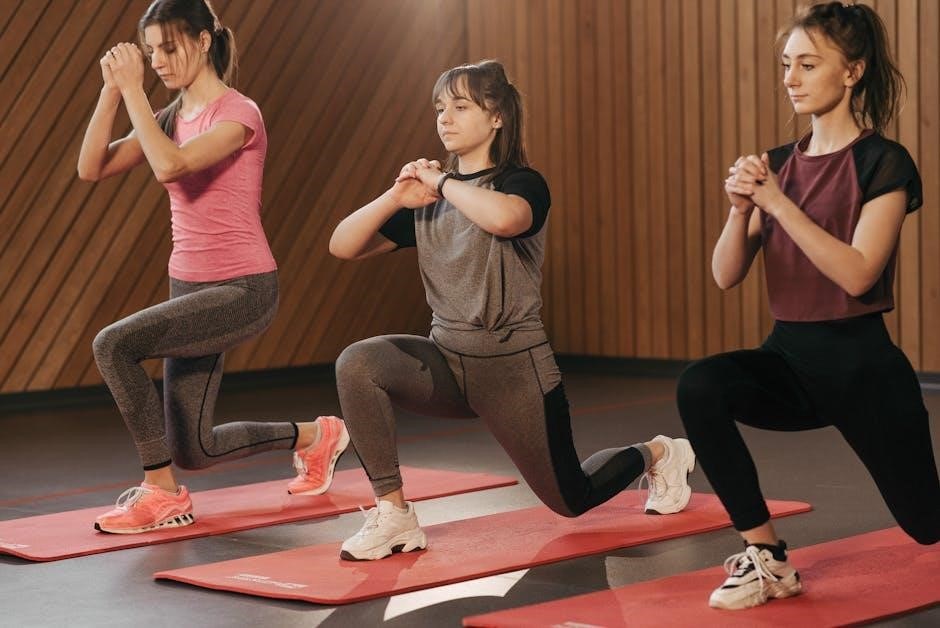
Patellar dislocation exercise PDFs often feature lunges as a key component of Phase 3 rehabilitation. Begin with static lunges, ensuring the knee tracks over the foot and avoids valgus collapse. Progress to forward lunges, then lateral and reverse lunges, increasing the challenge to stability.
Focus on controlled movements and maintaining a neutral spine. Adding light weights can further enhance strength, but prioritize form. Lunges strengthen the quadriceps, hamstrings, and gluteal muscles, crucial for dynamic knee control and preventing re-dislocation.
Step-Ups
Step-ups are frequently included in patellar dislocation exercise PDFs as a progressive exercise for Phase 3. Start with a low step height, focusing on controlled ascent and descent. Ensure the knee tracks directly over the foot, avoiding inward collapse – a common issue post-dislocation.
Gradually increase the step height as strength improves. Step-ups effectively target the quadriceps, glutes, and hamstrings, enhancing lower limb stability and functional movement patterns. Proper form is paramount to prevent re-injury and promote optimal recovery.
Squats (Progressive)
Squats, a cornerstone of many patellar dislocation exercise PDFs, require a progressive approach. Begin with partial squats, ensuring the knees track in line with the toes and do not extend past the feet. Focus on maintaining a neutral spine and engaging core muscles throughout the movement.
As strength increases, gradually deepen the squat, but avoid exceeding a comfortable range of motion. Wall sits can be incorporated as a preparatory exercise. Proper squat technique is vital to rebuild strength and stability, minimizing the risk of re-dislocation.
Proprioceptive Exercises
Proprioception, or the body’s awareness of its position in space, is crucial for patellar dislocation recovery, and detailed PDFs emphasize this. Exercises often include single-leg stance with eyes open and closed, wobble board activities, and balance beam walks. These drills challenge the knee’s stability and retrain the neuromuscular system.
Focus should be on maintaining proper alignment and preventing compensatory movements. Incorporating perturbations (small, unexpected movements) can further enhance proprioceptive gains. Consistent practice improves dynamic knee control, reducing re-injury risk.
Gait Retraining
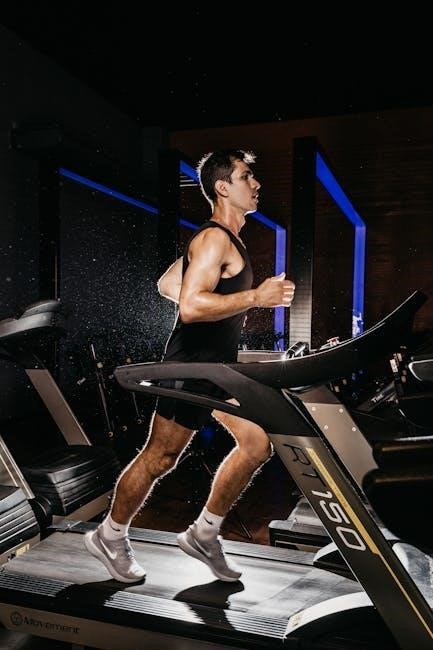
Patellar dislocation often alters natural walking patterns, necessitating gait retraining, as outlined in many rehabilitation PDFs. Initially, focus on normalizing stride length and cadence, avoiding limping or altered mechanics. Mirror feedback is invaluable for visual correction of lower limb alignment during walking.
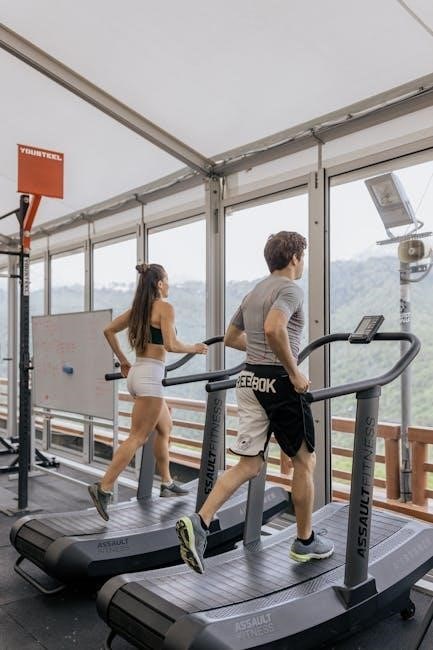
Progressive exercises include treadmill walking with varying speeds and inclines, and overground walking on different surfaces. Addressing any observed deviations – like excessive knee valgus or varus – is key. Re-educating patients on proper stair climbing and descent is also vital.
Importance of Avoiding Knee Hyperextension
Knee hyperextension significantly increases the risk of re-dislocation following a patellar dislocation, as detailed in numerous exercise PDFs. Maintaining a slight bend in the knee during stance phase is crucial, preventing excessive strain on the patellofemoral joint.
Rehabilitation programs emphasize strengthening the hamstring muscles, which act as dynamic stabilizers against hyperextension. Proprioceptive exercises enhance awareness of knee position, aiding in voluntary control. Patients must learn to consciously avoid locking their knees during daily activities and sport.
Stair Climbing and Descent Techniques
Patellar dislocation exercise PDFs highlight the importance of modified stair negotiation. Ascending, focus on engaging the gluteal muscles and maintaining a controlled pace, avoiding full knee extension at the top step.
Descending requires even greater caution; initiate with the stronger leg, bending the knees and hips to lower the body gradually. Utilizing a mirror for visual feedback during practice, as recommended, helps correct alignment. Re-educating patients on proper form is essential to minimize patellar stress during functional activities.
Return to Sport Considerations
Patellar dislocation exercise PDFs emphasize a gradual return to sport, guided by achieving full, pain-free range of motion and adequate strength. Aerobic reconditioning, starting with treadmill walking and progressing to running, is crucial.
Prior to full participation, assess proprioception and dynamic stability. A supervised trial period with increasing intensity is recommended. Athletes should be educated on avoiding knee hyperextension and maintaining proper biomechanics to minimize re-injury risk. Full return depends on successful completion of all rehabilitation phases.
Adherence to Rehabilitation Protocol
Patellar dislocation exercise PDFs highlight the critical importance of consistent adherence to the prescribed rehabilitation program. Successful outcomes depend on patient willingness and commitment to completing each phase diligently;
Studies assessing rehabilitation feasibility emphasize retention and understanding participant experiences. Regular follow-up and clear communication with the physical therapist are essential. Modifications may be needed based on individual progress, but deviations should be discussed. Consistent effort maximizes recovery potential and minimizes the risk of recurrent instability.
Potential Complications and Red Flags
Patellar dislocation exercise PDFs should outline potential complications, including persistent pain, swelling, or a feeling of instability. Recurrent dislocations are a significant concern, requiring prompt medical attention.
Red flags include increasing pain despite adherence to the protocol, new clicking or popping sensations, or limitations in range of motion. Patients should immediately report these symptoms to their healthcare provider. Ignoring these signs could delay appropriate intervention and hinder optimal recovery, potentially leading to chronic instability.
The Feasibility of Supervised vs. Self-Managed Rehabilitation
Patellar dislocation exercise PDFs often don’t address the practicality of supervised versus self-managed programs. Research explores patient willingness to randomize into such studies, assessing recruitment rates and adherence.
Feasibility studies are crucial to understand participant experiences with recovery and the acceptability of interventions and follow-up methods. A full-scale RCT comparing these approaches requires careful consideration of retention rates and the resources needed for effective supervision versus clear, accessible PDF guidance.
Resources for Patellar Dislocation Exercise PDFs
Numerous online resources offer patellar dislocation exercise PDFs, but quality varies significantly. Orthopedic clinics and hospital websites frequently provide detailed rehabilitation protocols, often downloadable as PDFs.
Professional organizations like sports medicine associations may also host valuable materials. It’s vital to verify the source’s credibility – look for PDFs created by qualified physical therapists or orthopedic surgeons. Always discuss any downloaded PDF program with your healthcare provider before starting, ensuring it aligns with your specific needs and recovery stage.
Consistent adherence to a rehabilitation program, detailed in exercise PDFs, is crucial for long-term stability and function following a patellar dislocation. Proprioceptive training and gait retraining are vital components, alongside continued strengthening.
Preventing re-dislocation requires ongoing attention to lower limb alignment, especially during stair negotiation. Maintaining quadriceps and hamstring strength, alongside avoiding knee hyperextension, minimizes risk. Regular review with a physical therapist ensures continued progress and addresses any emerging concerns, promoting lasting knee health.